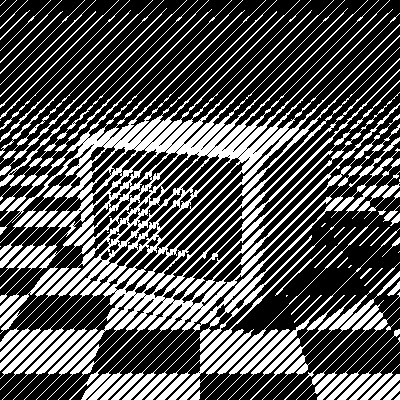
01Error diffusion, classic
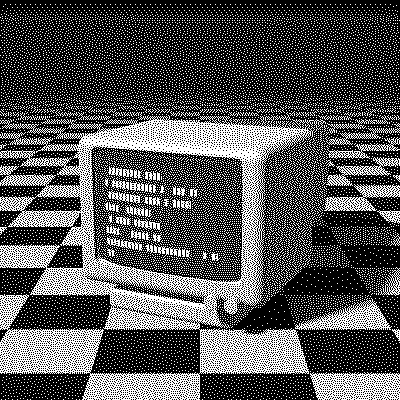
Floyd–Steinberg
Robert W. Floyd & Louis Steinberg · 1976
17 techniques, each shown on the same specimen: a CRT terminal on a checkered table. Compare error diffusion, ordered, noise-based and halftone screen dithering before applying them in the editor.
Each pixel is rounded to black or white and the rounding error is pushed onto the neighbors still to be processed. Organic and detailed.
01Error diffusion, classic
Robert W. Floyd & Louis Steinberg · 1976
02Error diffusion, classic
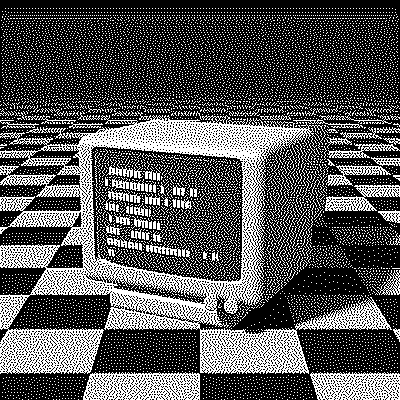
J.F. Jarvis, C.N. Judice & W.H. Ninke · 1976
03Error diffusion, classic
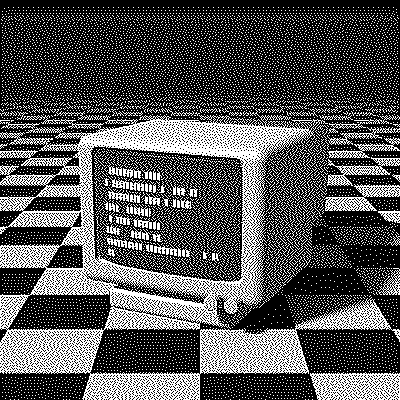
Peter Stucki · 1981
04Error diffusion, classic
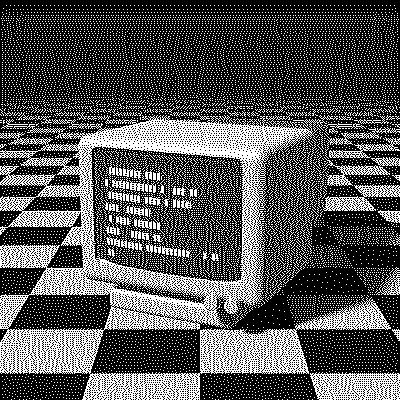
Daniel Burkes · 1988
05Error diffusion, classic
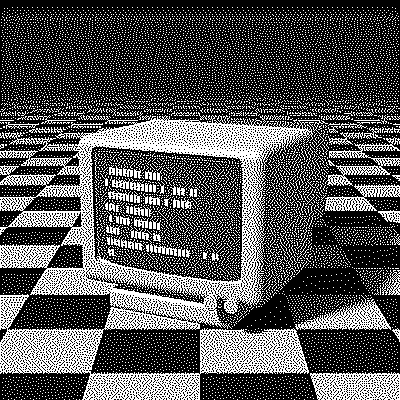
Frankie Sierra · 1989
06Error diffusion, classic
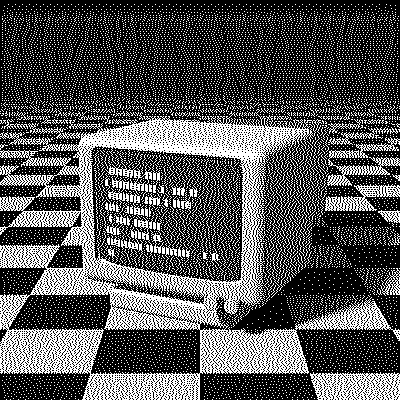
Frankie Sierra · 1990
07Error diffusion, classic
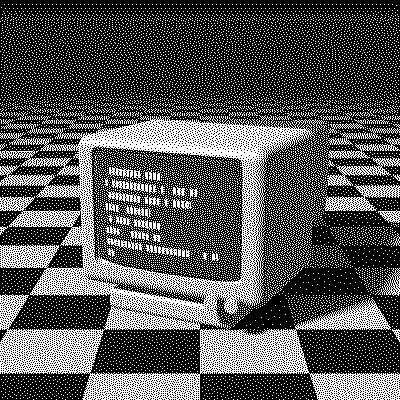
Frankie Sierra · 1990
08Error diffusion, classic
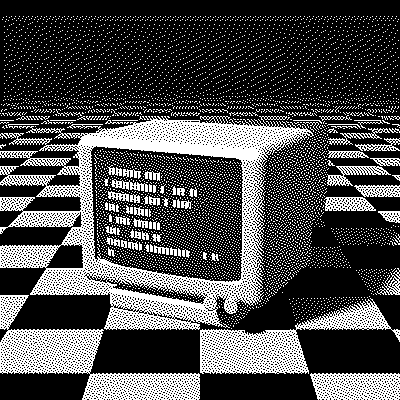
Bill Atkinson (Apple) · 1984
Each pixel is compared with a threshold matrix tiled across the image. Fast, parallel and deliberately textured.
09Ordered, classic
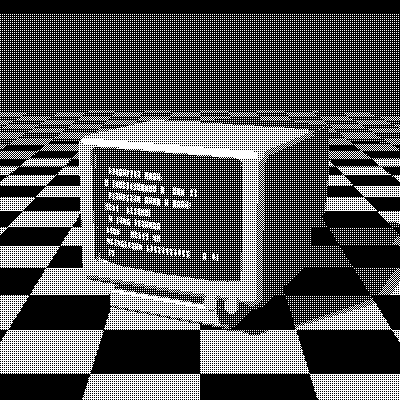
Bryce Bayer · 1973
10Ordered, classic
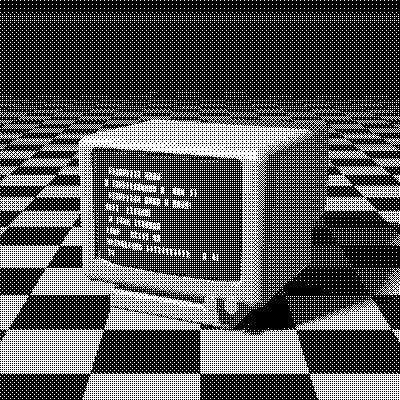
Bryce Bayer · 1973
11Ordered, classic
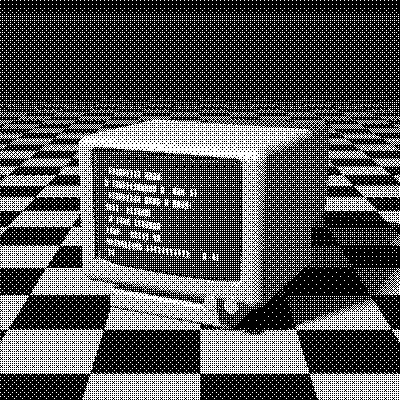
Bryce Bayer · 1973
12Ordered, classic
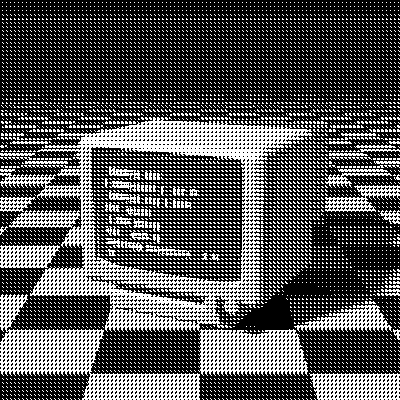
Various researchers · 1980s
13Ordered, modern
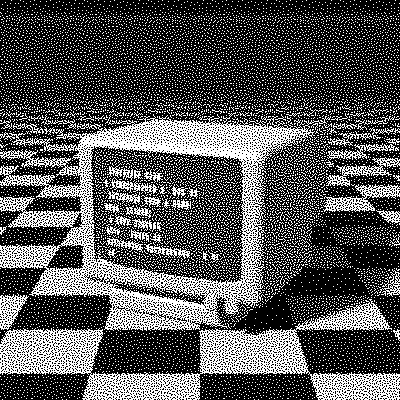
Robert Ulichney · 1993
Thresholds come from noise instead of a fixed pattern, trading structure for grain.
14Noise-based, modern
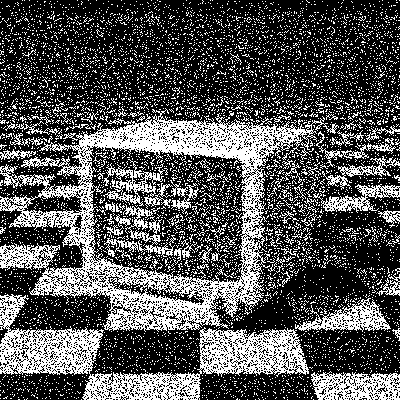
15Noise-based, modern
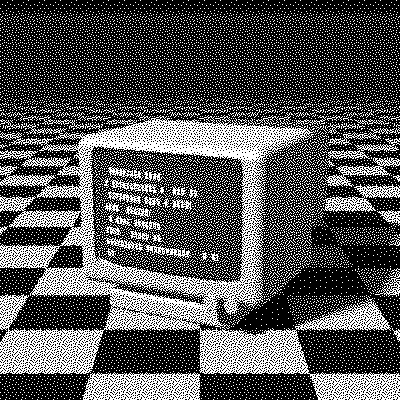
Robert Ulichney · 1993
A grid of dots or lines, turned to an angle like a print screen, grows with the tone. Screen size, angle and dot shape are adjustable.
16Halftone screen, classic
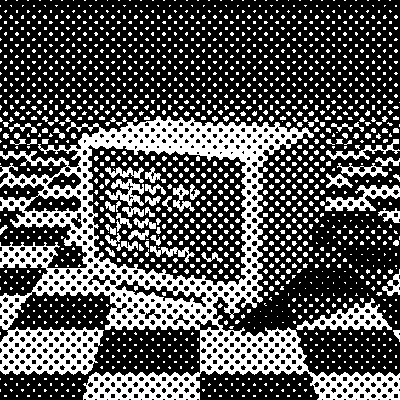
Frederic Ives · 1880s
17Halftone screen, classic